NEWS
EWA and UOB Announce Launch of 46.2 MW Solar Energy Project on University Campus
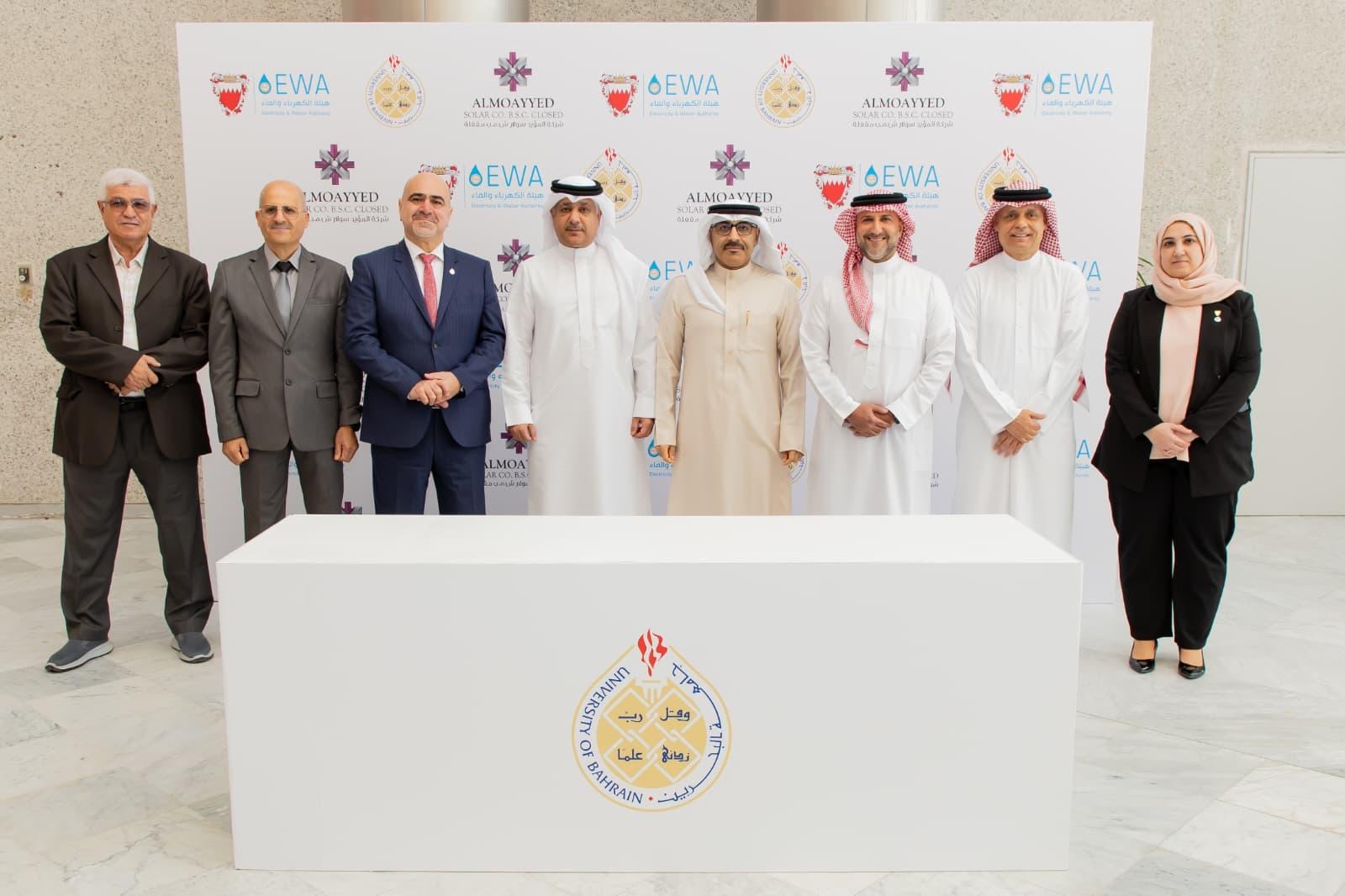
The Electricity and Water Authority (EWA), in collaboration with the University of Bahrain, has launched a solar power generation project within the university campus. The launch ceremony was attended by His Excellency Eng. Kamal bin Ahmed Mohamed, President of the Electricity and Water Authority; His Excellency Dr. Mohammed bin Mubarak Juma, Minister of Education and Chairman of the University of Bahrain’s Board of Trustees; Mr. Mohammed Farouk Almoayyed, Chairman of the Almoayyed International Group, the company implementing the project; Dr. Fuad Mohammed Al-Ansari, President of the University of Bahrain; and a number of officials.
The project ranks among the largest renewable energy initiatives undertaken at an educational institution in the Kingdom of Bahrain. It is part of the national effort to diversify energy sources, reduce reliance on natural gas, and lower pollution levels.
He stated that the estimated project cost is approximately 9 million Bahraini Dinars (BHD). It involves installing 64,606 solar panels across car parks (24.7 MW) and on ground-mounted systems (21.5 MW), bringing the total capacity to 46.2 MW. The system is expected to produce 70 gigawatt-hours annually, which will improve cost efficiency and provide direct benefits to the university.
He added that the system will reduce carbon emissions by roughly 35,000 tons of CO2 per year—equivalent to the environmental benefit of planting thousands of trees. An automatic panel cleaning system has also been implemented to ensure sustained operational efficiency.
Eng. Kamal affirmed that this project is a starting point for more similar initiatives EWA is committed to, supporting Bahrain’s vision for sustainability and clean energy.
For his part, His Excellency Dr. Mohammed bin Mubarak Juma emphasized that the project is a product of cooperation between government institutions to advance renewable energy by utilizing UOB’s extensive spaces for solar panels and power generation. He welcomed the step, resulting from constructive dialogue and diligent efforts by EWA and UOB.
The Minister noted that UOB’s efforts to diversify renewable energy sources align with the national strategy to boost the efficiency of alternative energy use, particularly solar power, which will positively impact national environmental protection efforts.
In turn, Dr. Fuad Mohammed Al-Ansari confirmed that the project is not only an environmental and economic initiative but also a practical step in supporting the university’s commitment to sustainability. When the system becomes operational in the second half of 2026, it will enable UOB to meet all its daytime electricity needs through direct solar consumption, with the ability to export surplus power to the national grid. This will reduce reliance on traditional energy and enhance energy efficiency on campus.
This project is a key step toward achieving Bahrain’s renewable energy goals and reflects its international commitment to sustainable energy, in line with national strategies to increase clean energy’s share in the total energy mix and achieve carbon neutrality by 2060.