NEWS
As Part of Government Efforts to Enhance Service Quality and Re-engineer Services, the University of Bahrain Upgrades Its Clearance Request Service
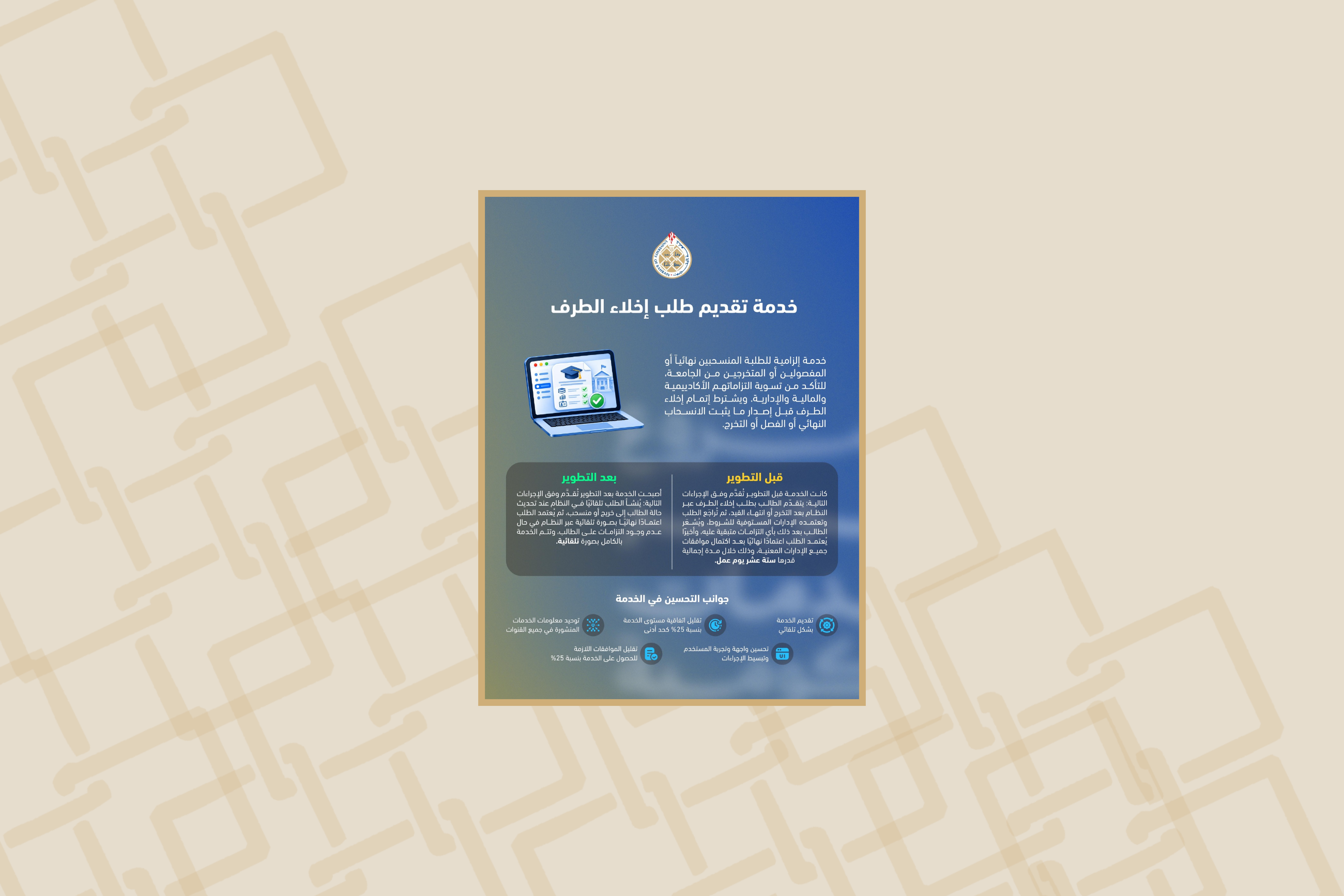
As part of ongoing government efforts to enhance service quality and re-engineer government services, the University of Bahrain has upgraded its Clearance Request Service, enabling students who have permanently withdrawn, been dismissed, or graduated to settle their academic, financial, and administrative obligations automatically. The request is now generated automatically in the system once a student’s status is updated to “Graduated” or “Withdrawn,” and is automatically approved when the student has no outstanding obligations.
Under the upgraded service, the process is now completed automatically, compared with the previous processing time of 16 working days. The improvements include reducing the Service Level Agreement (SLA) timeframe by at least 25%, enhancing the user interface and experience, simplifying procedures, automating service delivery, reducing the number of required approvals by 25%, and standardizing service information published across all channels.
In this regard, Dr. Fuad Mohammed Al-Ansari, President of the University of Bahrain, affirmed that upgrading the Clearance Request Service contributes to accelerating the completion of students’ academic, financial, and administrative procedures. This is achieved through automating the verification of outstanding obligations and automatically approving requests once all requirements have been fulfilled, thereby saving time and effort and expediting the issuance of documents related to graduation, permanent withdrawal, or dismissal.
Dr. Al-Ansari highlighted that the University continues to develop its services and strengthen digital transformation in alignment with government efforts to enhance operational efficiency and streamline procedures. He also emphasized the University’s commitment to promoting integration among its departments and improving work mechanisms to deliver services that meet students’ expectations and enhance their university experience.
It is worth noting that, as part of ongoing government efforts to develop and re-engineer government services, more than 1,300 government services have been documented, translated, and published, with 800 of these services undergoing improvement and re-engineering across various government sectors. These efforts have been guided by suggestions and feedback received through the National Suggestions and Complaints System “Tawasul,” investors’ feedback, and mystery shopper reports evaluating government services. They have also included the launch of service guidelines and Service Level Agreements (SLAs), contributing to more efficient procedures, improved service quality, enhanced beneficiary experiences, and advancing the government’s digital transformation agenda.