Operations and Institutional Arrangement
SDG 5: Focus Areas
5.3.4 Women’s Application in Underrepresented Subjects
Does your university as a body encourage applications by women in subjects where they are underrepresented
- through collaboration with other universities and/or community groups and/or government and/or NGOs in regional or national campaigns
- through university outreach?
The University actively encourages women’s applications in underrepresented subjects through strategic outreach and collaborative initiatives. Academic year data shows significant female participation in STEM (up to 58% enrollment, 50% graduation) and strong representation in Medicine and leadership roles (54.9% female leaders). Programs include regional campaigns, community engagement, and university-led outreach, such as Inspiring Success Stories lectures featuring female role models, employment and job placement programs (3,274 female nominations), and Careers Day events promoting women in tourism and finance. These efforts ensure inclusive access, mentorship, and pipeline progression, fulfilling SDG 5 by advancing gender equity in traditionally male-dominated fields.
The University’s application data show sustained and strong participation by women in the applicant pool over recent years.
Female applicants made up:
- 58% of all applicants in 2022/23,
- 55% in 2023/24,
- and 57% in 2024/25,
demonstrating a consistently higher share of female interest across disciplines.

Furthermore, the University Female Student Mentorship Program empowers women across all disciplines, with emphasis on underrepresented subjects. The program pairs female students with experienced academic and industry mentors who provide personalised guidance, networking opportunities, and leadership development. The scheme removes traditional access barriers to ensure inclusive opportunity for motivated students. The program’s structured mentoring, evaluation, and recognition strengthen UOB’s institutional support for women’s empowerment and contribute to national gender equity objectives.
Related Links:
Download Female Student Mentorship Program Guidelines
Gender Distribution Data Overview
The following charts provide a comprehensive view of gender distribution trends across Applicants, Enrollment, Graduates, and Scholarships highlighting women’s participation in underrepresented subjects and degree levels over multiple academic years.
- Applicants Data: Tracking data for three academic years by subject and degree, showing application patterns and gender representation across STEM, Medicine, and Arts & Humanities, as well as undergraduate, master’s, and doctoral programs.
- Enrollment Data: Includes detailed figures for September 2024 by college and degree, plus three-year tracking by subject and degree. These charts demonstrate women’s strong presence in enrollment pipelines, particularly in STEM and advanced degrees, evidencing institutional efforts toward gender equity and inclusive access.
- Graduates Data: Tracks graduation outcomes for three academic years by subject and degree, confirming sustained female success and progression from enrollment to completion. The data reflects parity gains in STEM and high female representation in Medicine and Arts & Humanities, validating strategies for retention, mentorship, and leadership pathways.
- Scholarships Data: Tracks scholarship allocation over three academic years, confirming strong female participation in underrepresented fields. The data reflects institutional strategies for inclusive financial aid and outreach, supporting SDG 5 and advancing gender equity in STEM disciplines.
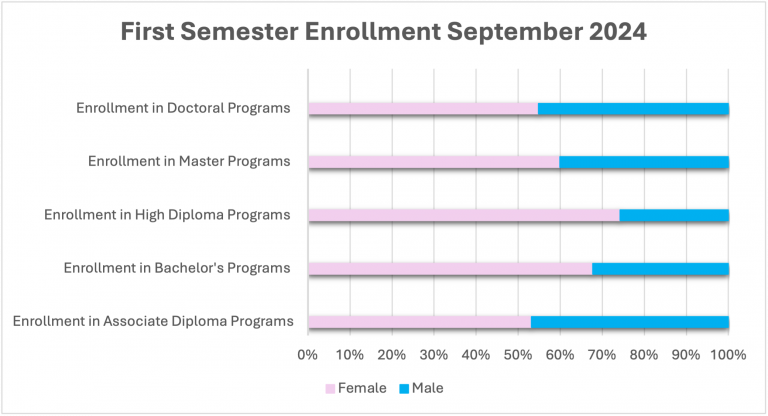
First Semester Enrollment – September 2024
The chart shows strong female application, admission, enrollment across all levels, with women comprising about half to two‑thirds of cohorts from Associate Diploma to Doctoral programs. Higher female shares in Bachelor’s and High Diploma signal effective outreach, mentorship, and access measures that convert interest into pipeline progression in underrepresented subjects (e.g., STEM/ICT/Engineering). Continuity into Master’s and Doctoral tracks evidences retention and progression, aligning with SDG 5 by demonstrating gender equity in applications, admissions, and advanced study pathways.
Second Semester Enrollment Academic Year 2023/2024
The chart below evidences strong female application and enrollment across all award levels, with women forming ~50–75% of cohorts from Associate Diploma through Doctoral routes. The highest female shares appear in Bachelor’s and High Diploma programs, signalling effective access measures, mentoring, and outreach that convert interest into pipeline progression. This pattern supports SDG 5 by demonstrating women’s uptake in underrepresented subjects (e.g., STEM/ICT/Engineering/Physics), sustained retention into Master’s and Doctoral studies, and institutional gender equality in applications, admissions, and progression.

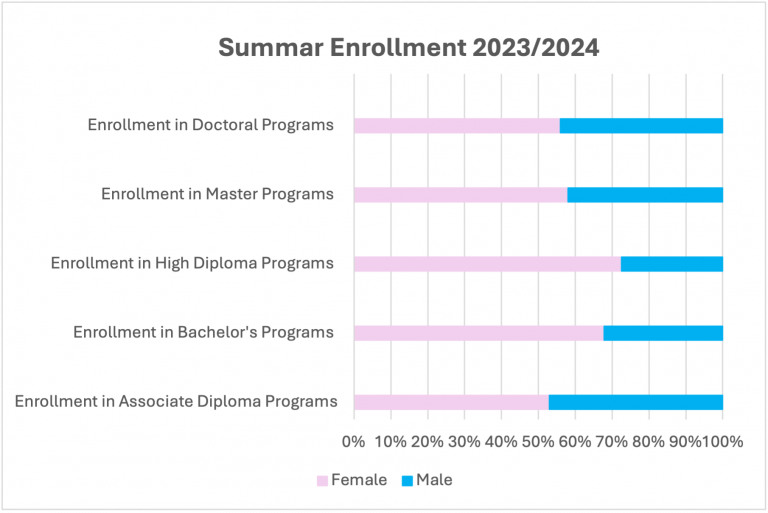
Summer Enrollment Academic Year 2023/2024
Summer term data confirms sustained female participation when opportunities are traditionally lower, indicating resilient demand and successful targeted programs. Women account for ~50–65% across Associate, Bachelor’s, High Diploma, Master’s, and Doctoral levels, evidencing continuous access and year‑round retention in underrepresented fields. The visible presence at postgraduate stages (Master’s/Doctoral) strengthens the talent pipeline, reflecting institutional gender‑inclusive admissions, mentoring, and role‑model campaigns that translate into progression and leadership pathways.
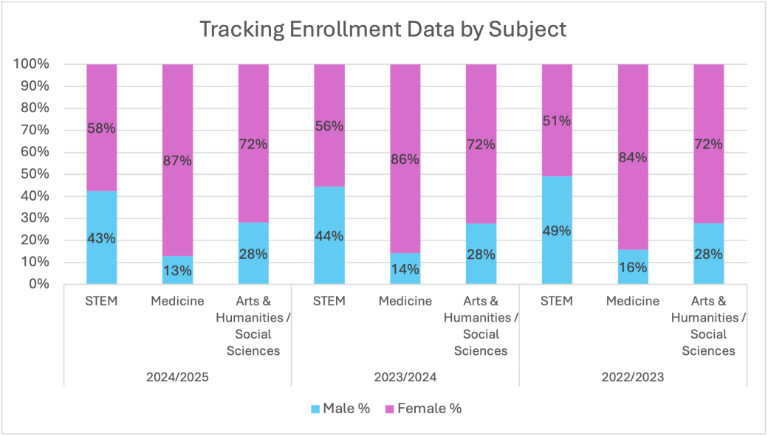
Tracking Enrollment by Subject (Academic Years 2022/2023 to 2024/2025)
Women’s enrollment in STEM rose from 47% (2022/2023) to 58% (2024/2025), signaling effective outreach in traditionally male-dominated fields. Medicine shows exceptional female dominance (84–87%), while Arts & Humanities remain high (72%). These figures demonstrate gender-inclusive strategies and balanced representation across disciplines, fulfilling SDG 5 by increasing women’s application in underrepresented STEM areas.
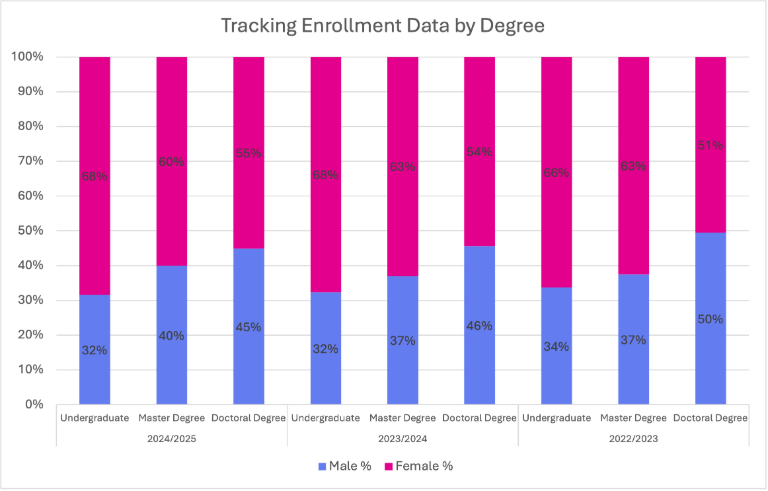
Tracking Enrollment by Degree (Academic Years 2022/2023. to 2024/2025)
Across three academic years, women consistently dominate enrollment: Undergraduate 66–68%, Master’s 63–66%, Doctoral 51–55%. This upward trend in postgraduate participation evidences strong pipeline progression and retention. Female representation above 50% at doctoral level confirms success in underrepresented subjects, supported by inclusive admissions, mentorship, and gender equity policies. Keywords: SDG 5, women’s application, underrepresented subjects, progression, retention, doctoral access.
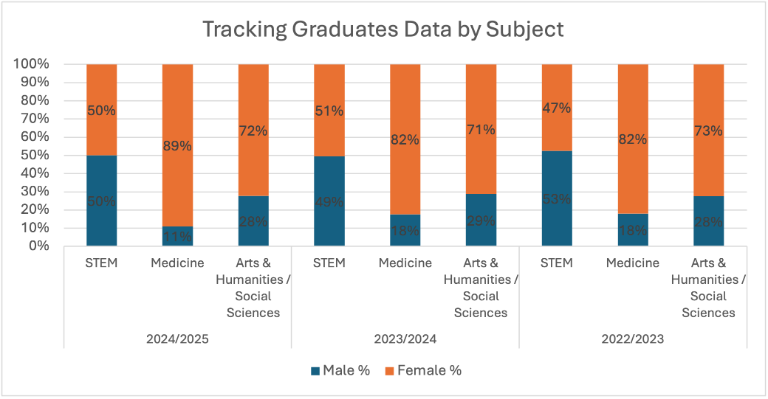
Tracking Graduates by Subject (Academic Years 2022/2023 to 2024/2025)
Women graduate at parity in STEM (50% in 2024/2025 vs. 47% in 2022/2023), marking a breakthrough in underrepresented fields. Medicine remains female-led (82–89%), and Arts & Humanities sustain high female shares (71–73%). These figures demonstrate pipeline integrity from enrollment to graduation, reinforcing SDG 5 through inclusive academic policies, role-model programs, and year-on-year growth in STEM participation.
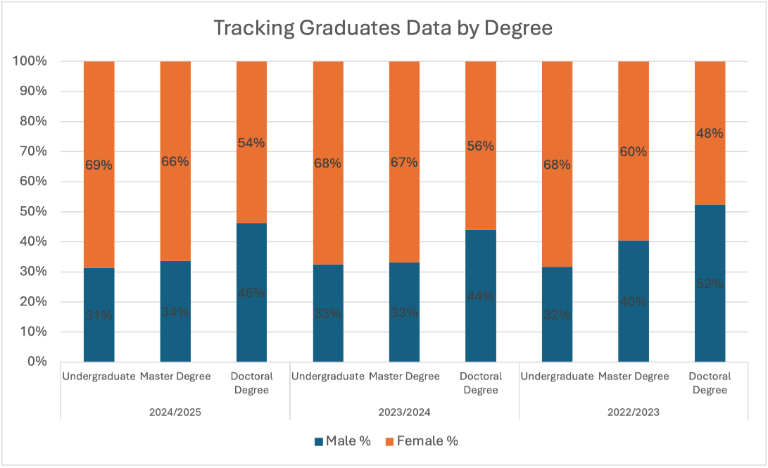
Tracking Graduates by Degree (Academic Years 2022/2023 to 2024/2025)
Graduation data confirms sustained female success: Undergraduate 68–69%, Master’s 60–67%, Doctoral 48–56%. The rise in doctoral completions (from 48% to 54%) highlights retention and progression into advanced research roles. These outcomes validate institutional efforts in mentoring, scholarship support, and gender equity, ensuring women thrive in underrepresented subjects and leadership pathways.
Tracking Percentage of Female Receiving Scholarship
The chart below shows strong female representation in scholarships across underrepresented fields from 2022–2025. Engineering maintains ~56% female share, Information Technology ranges 56–58%, and Science reaches 85–89%. Health and Sport Sciences records 79–85%. These figures evidence targeted measures that attract and support women in STEM and related disciplines, aligning with SDG 5 and institutional gender equity goals.

Programs include regional campaigns, community engagement, and university-led outreach:
1. Inspiring Success Stories
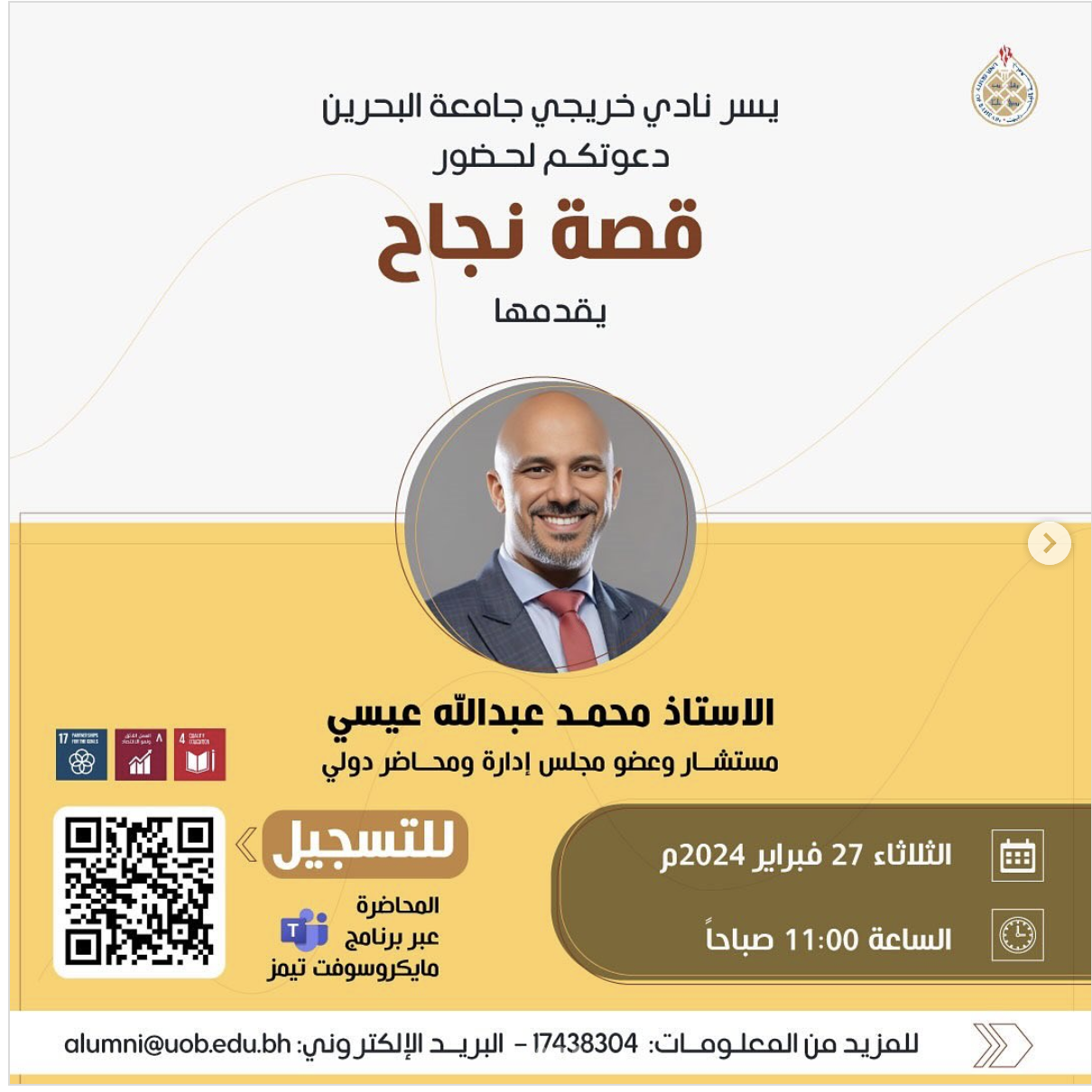
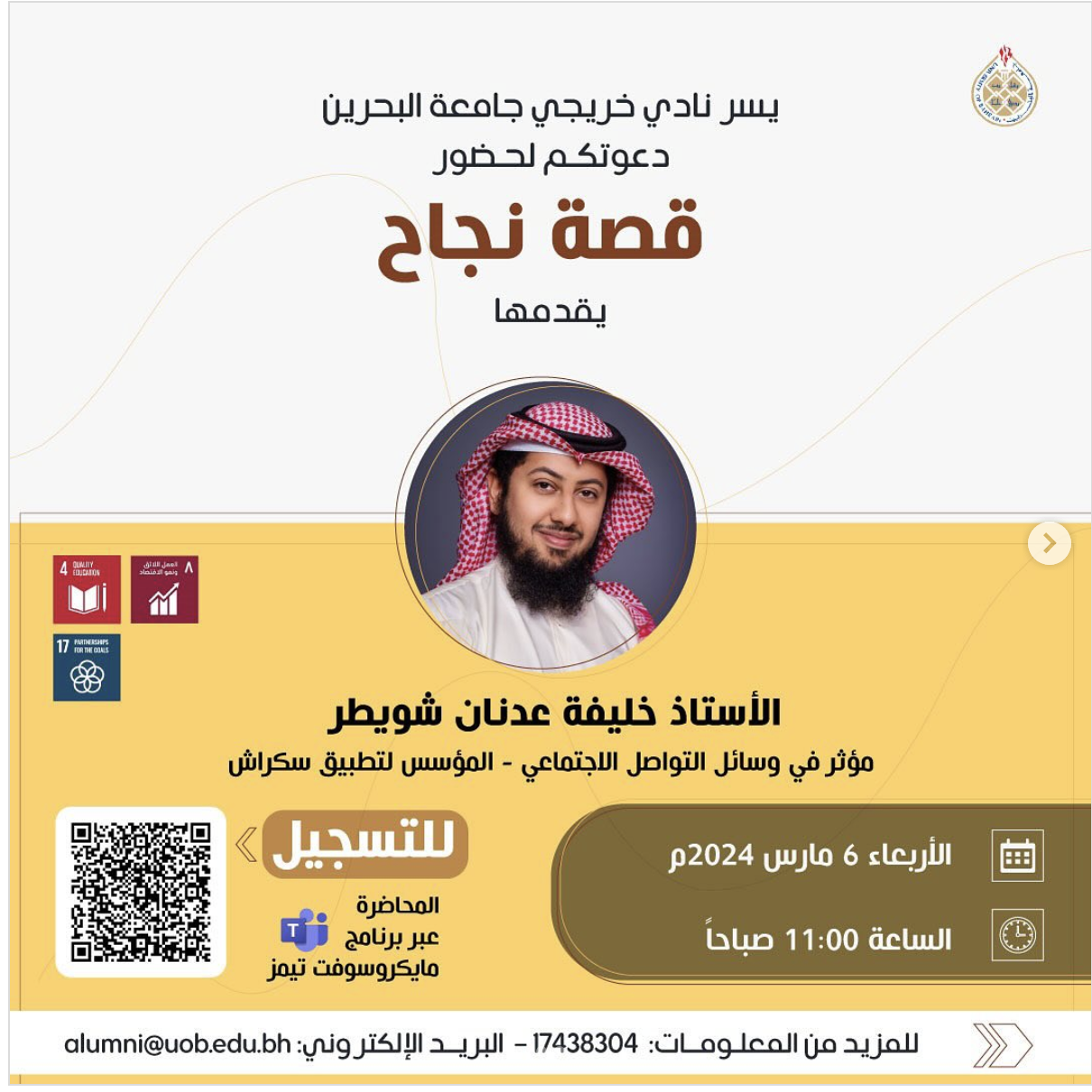
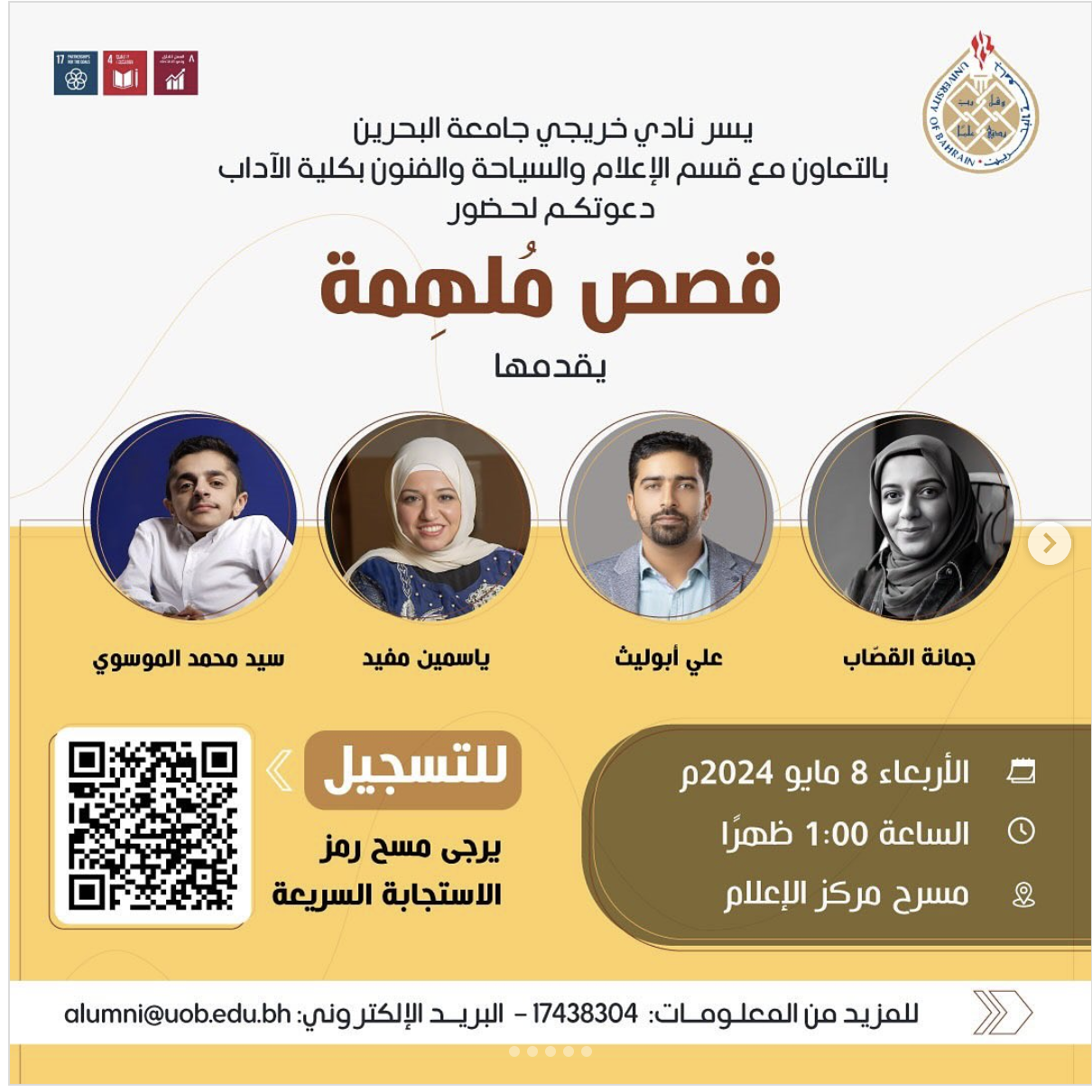
- Highlights achievements of UOB graduates, emphasizing female role models and leadership pathways.
- Female participants: 246 (vs. 115 male)
- Mostly Female speakers.
Evidence Links:
2. We Are Proud of You
The University honors its graduates serving in leadership and administrative positions through social media recognition initiatives. Female graduates constitute 54.9% of all leadership roles during the academic year 2023/2024, reflecting the University’s continued progress in promoting gender representation in leadership.
Evidence: University Instagram Highlight
3. Employment and Job Placement Program
Facilitates the matching of qualified graduates with employment opportunities across the public and private sectors, thereby enhancing overall employability and advancing gender balance within the national workforce.
4. Careers Day Event
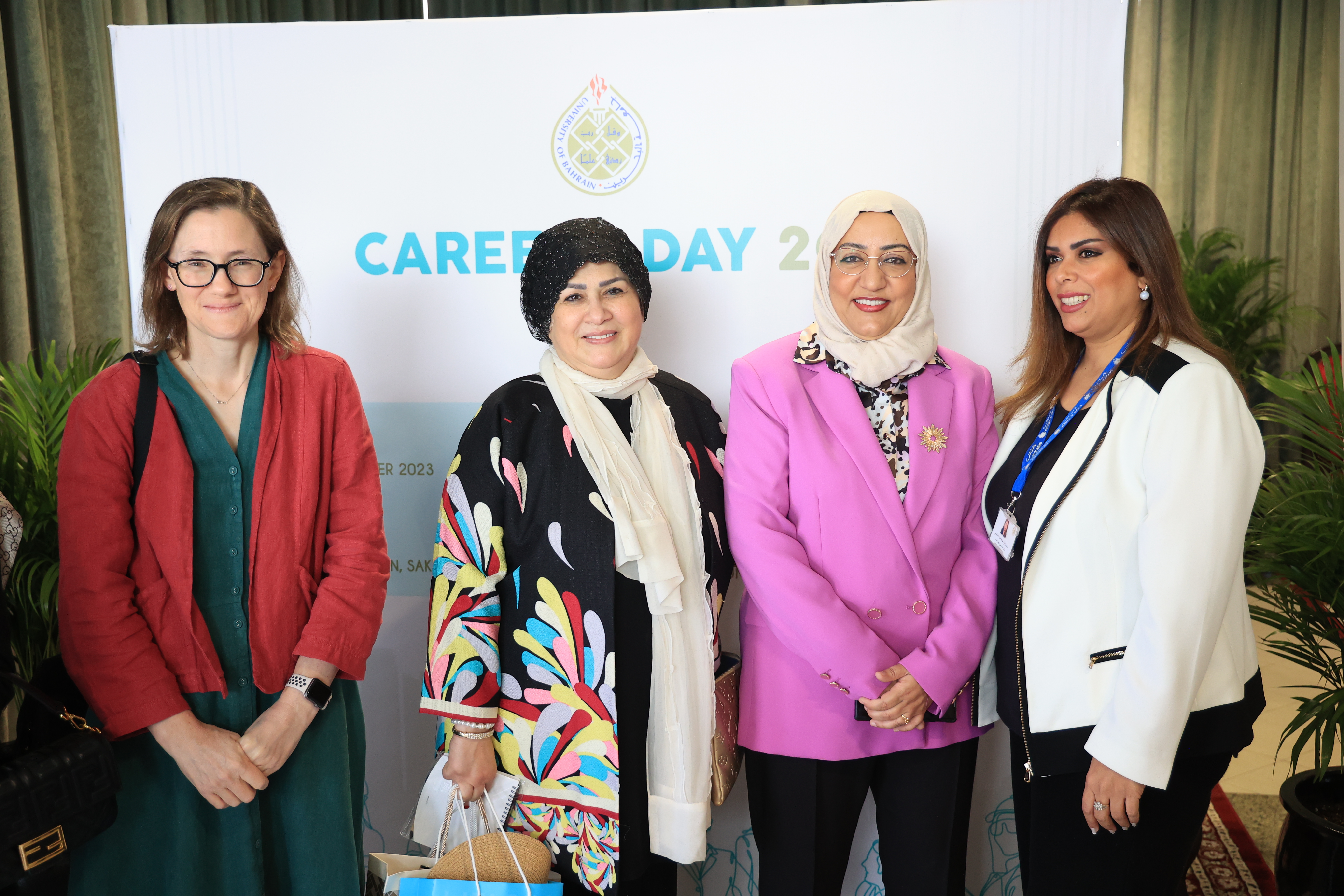
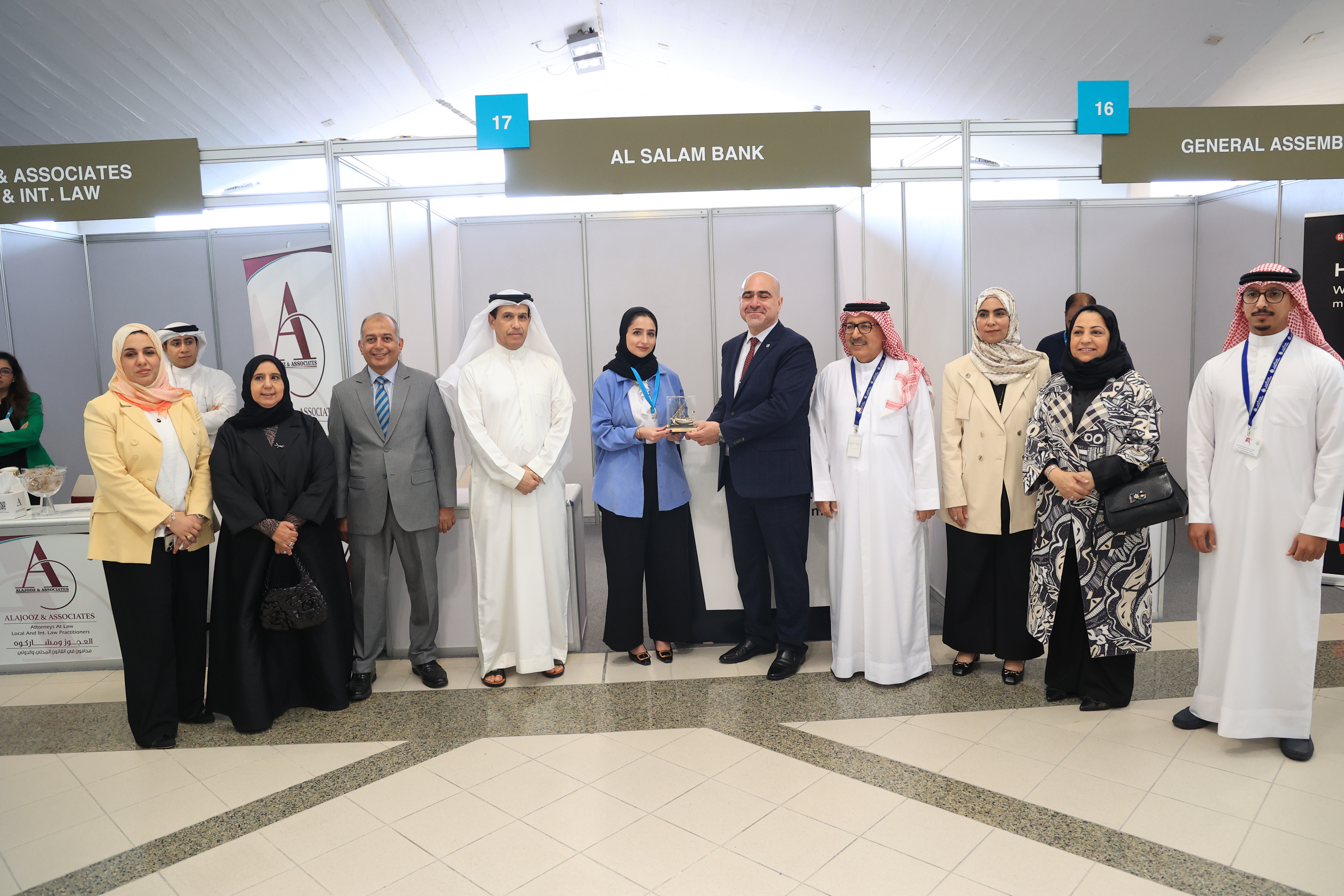
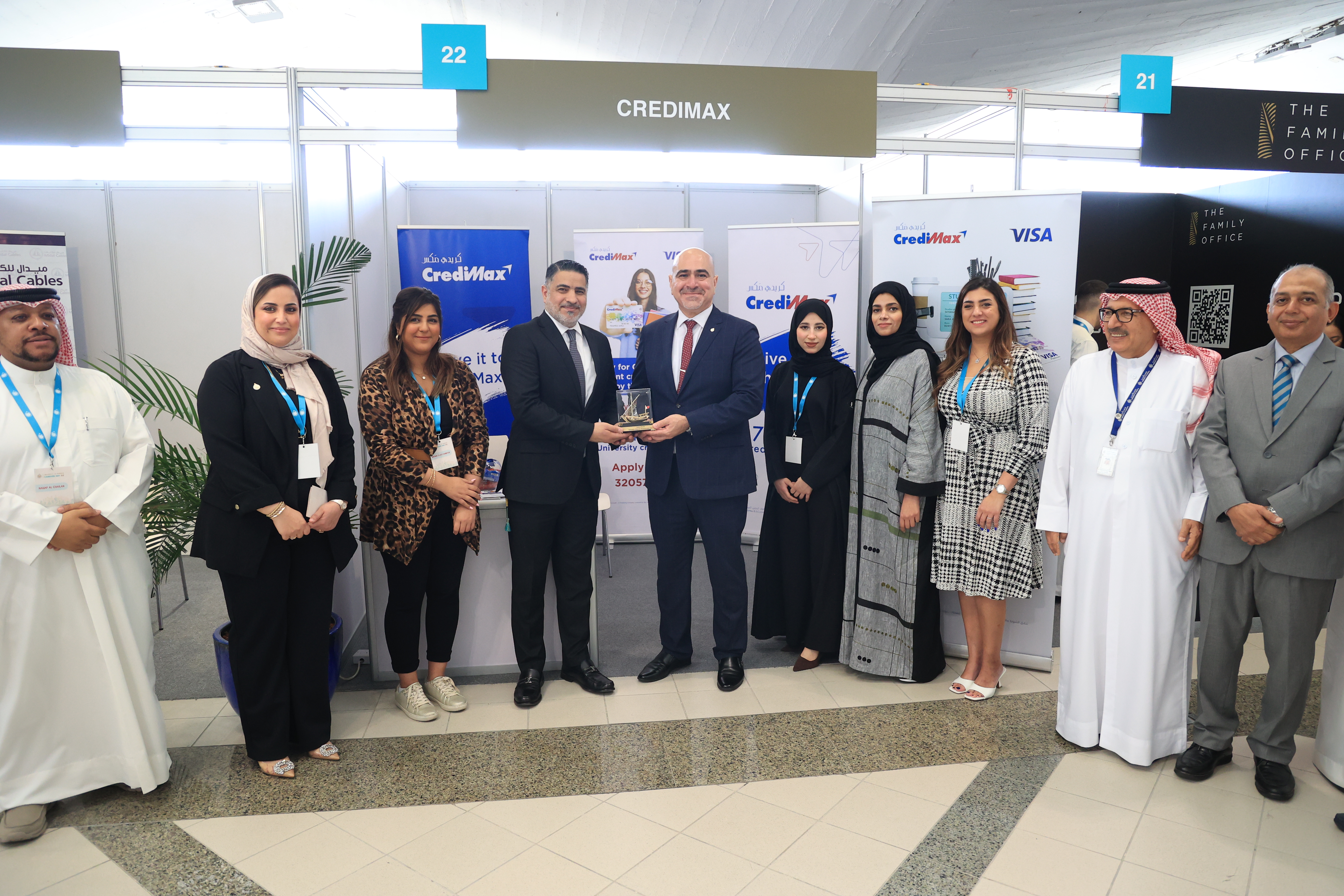
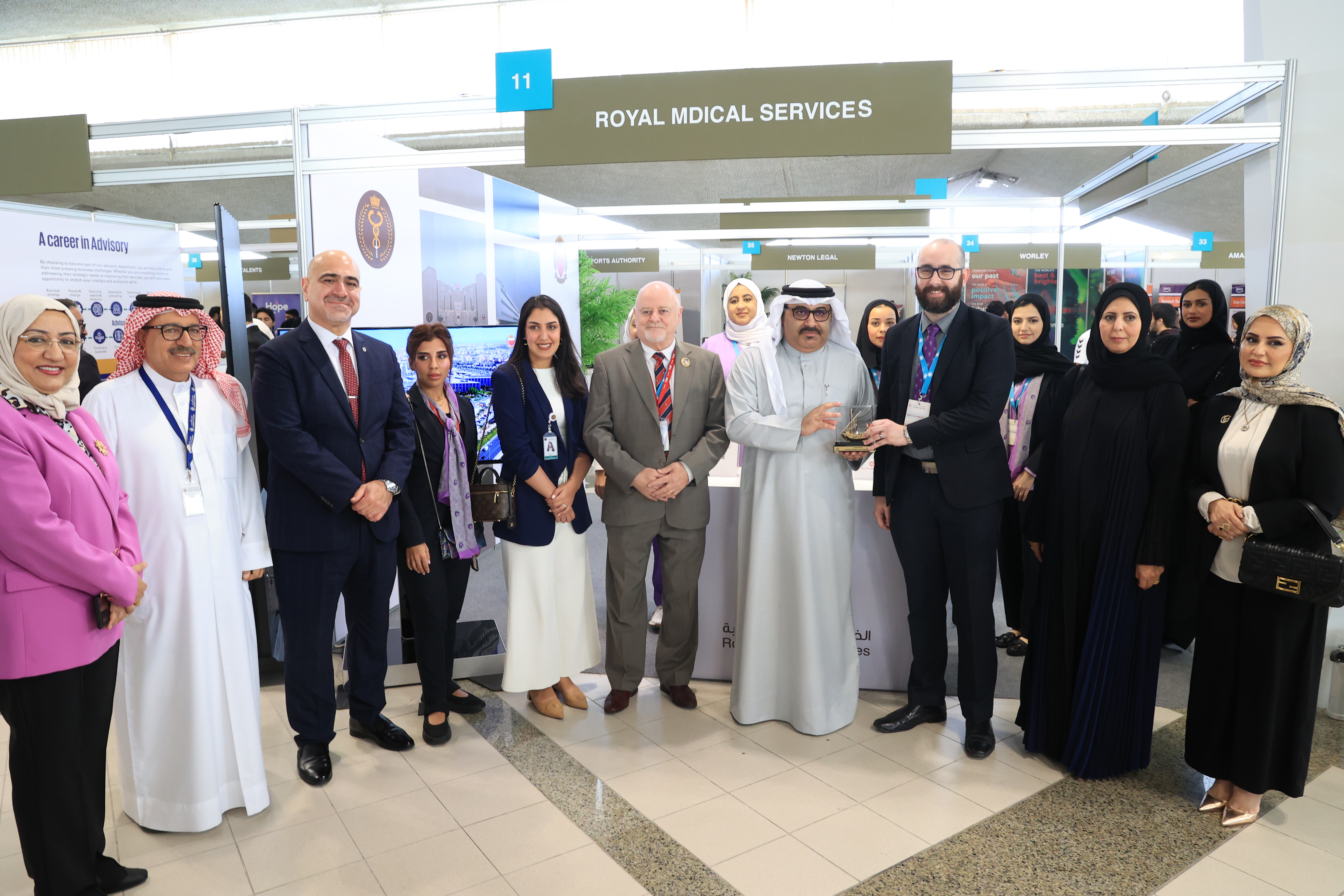
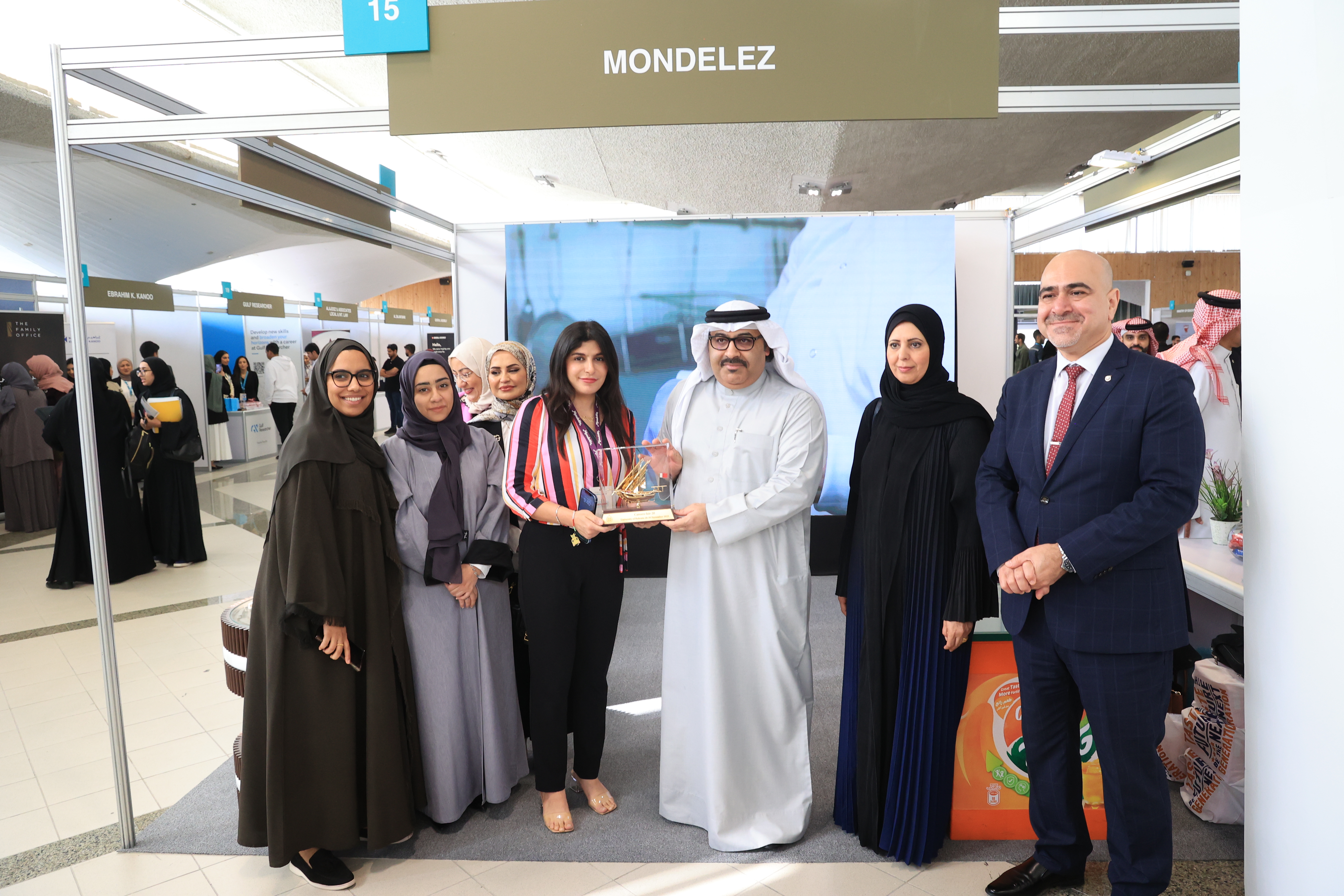
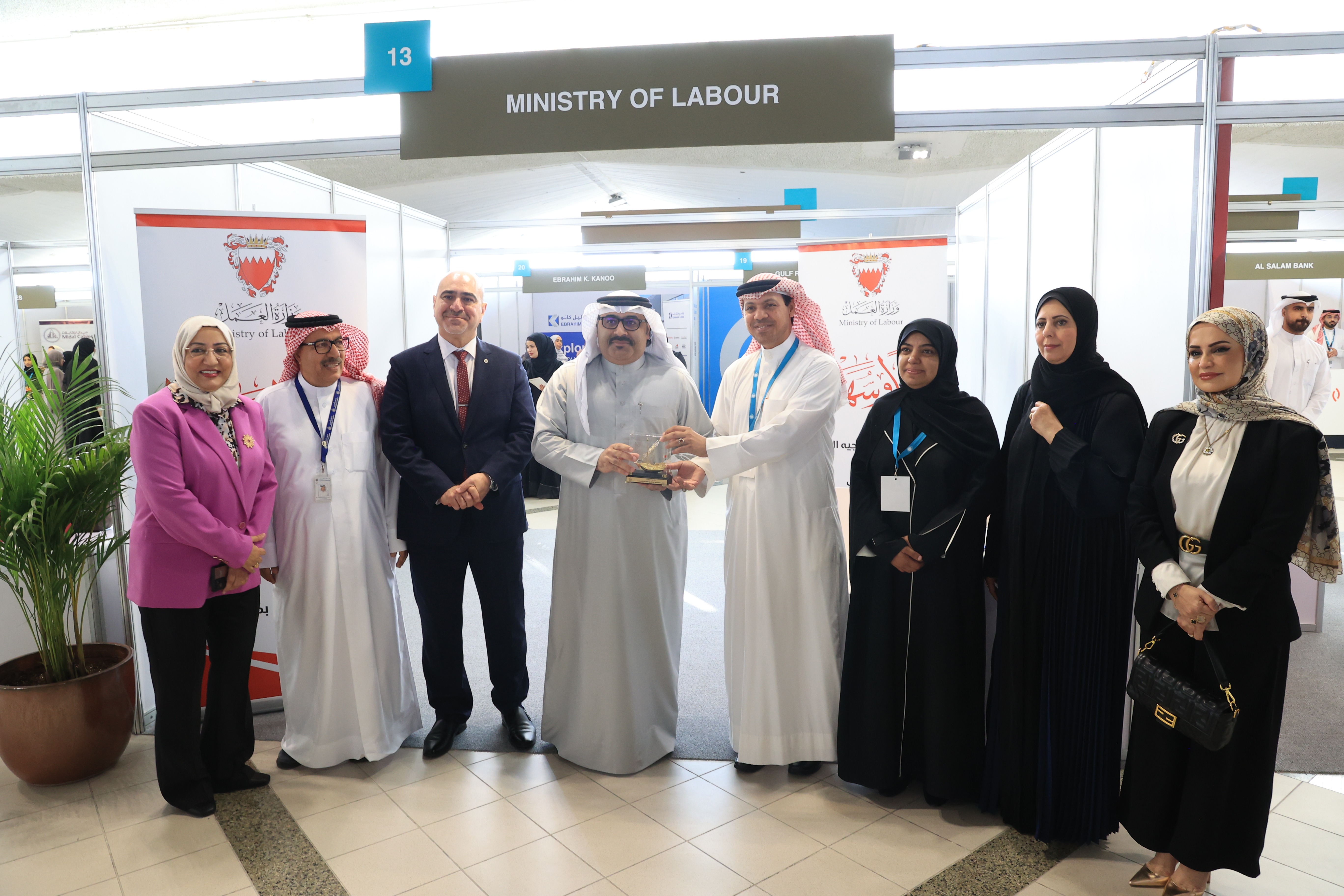
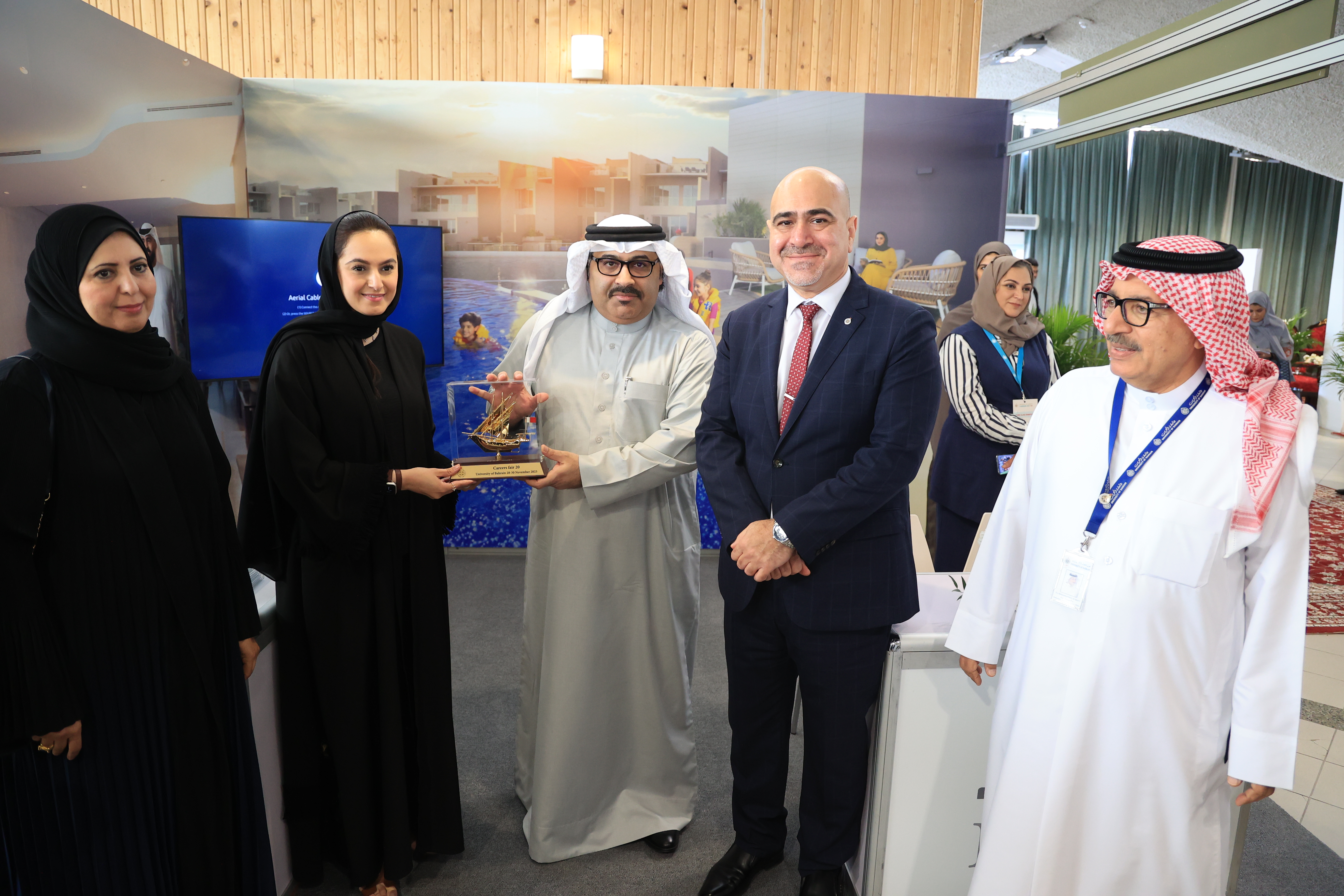
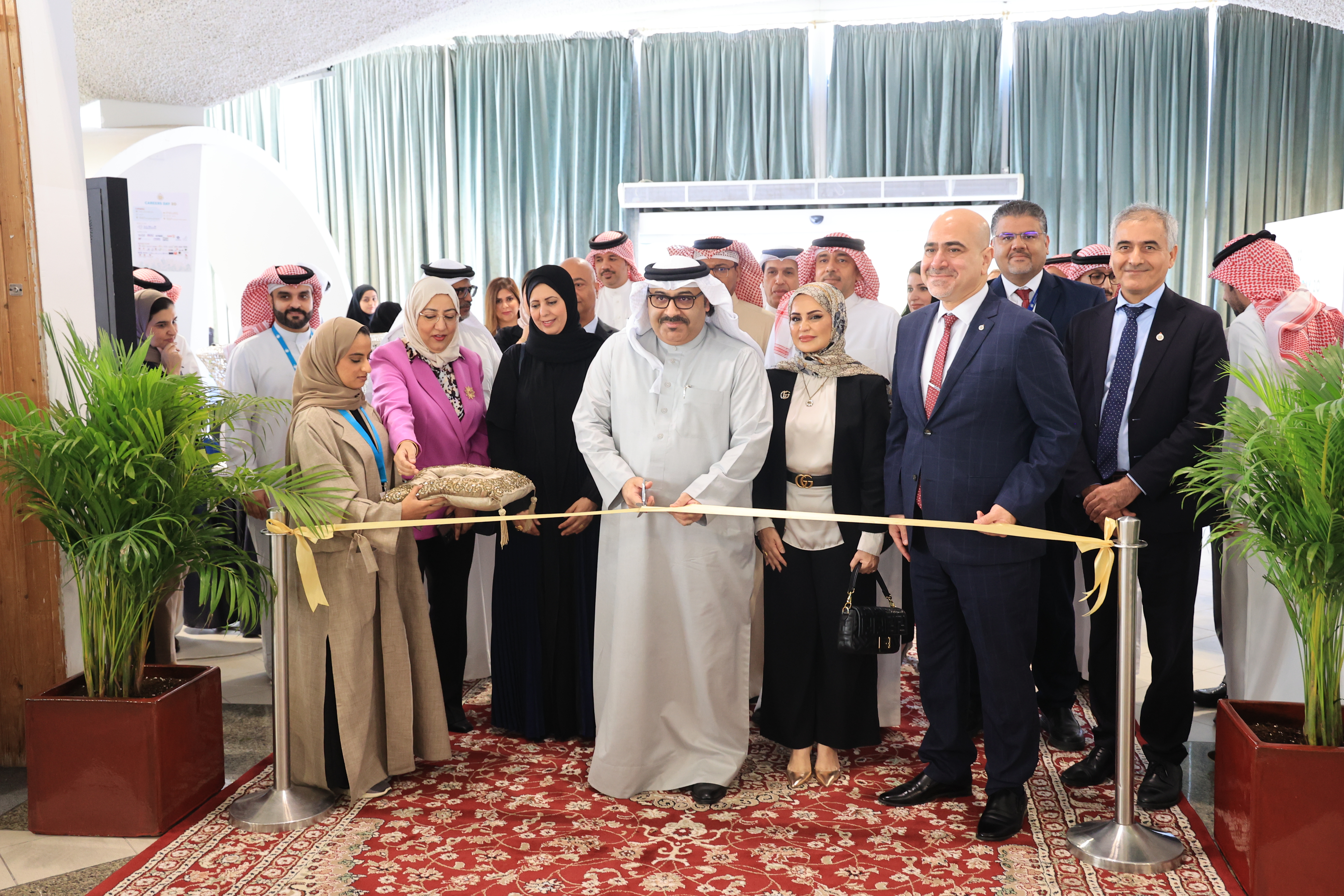
This event raised student and graduate awareness of employment opportunities in key economic sectors. It highlighted the skills required in local and global job markets and encouraged women to explore professional careers in tourism and financial services.
Evidence: Careers day 21