Operations and Institutional Arrangements
SDG 8: Focus Areas
8.2.7 Tracking Pay Scale for Gender Equity
Does your university as a body measure/track pay scale gender equity?
Yes. The University of Bahrain systematically measures and tracks pay scale gender equity through annual institutional reporting and national gender balance reports. This monitoring ensures equal pay for equal work and aligns with SDG 8.2.7.
Supporting Evidence:
1. Salary Framework
- Salaries, allowances, and benefits are determined under the Civil Service Law and Financial Regulations titled “Regulations on Determining Salaries, Employment Benefits, and Eligibility Criteria for Employees Subject to the Civil Service Law.”
- All employees receive compensation based on salary scales and wage tables issued by the Civil Service Bureau, ensuring fairness and non-discrimination.
2. Gender Pay Equity Tracking
- Annual reporting includes National Gender Balance Reports (2019–2024) with detailed data on male and female employees, wage expenditure, promotions, and overtime payments.
- Key indicators tracked: average wage per employee, gender pay gap percentage, female share of employees, and female share of promotions.
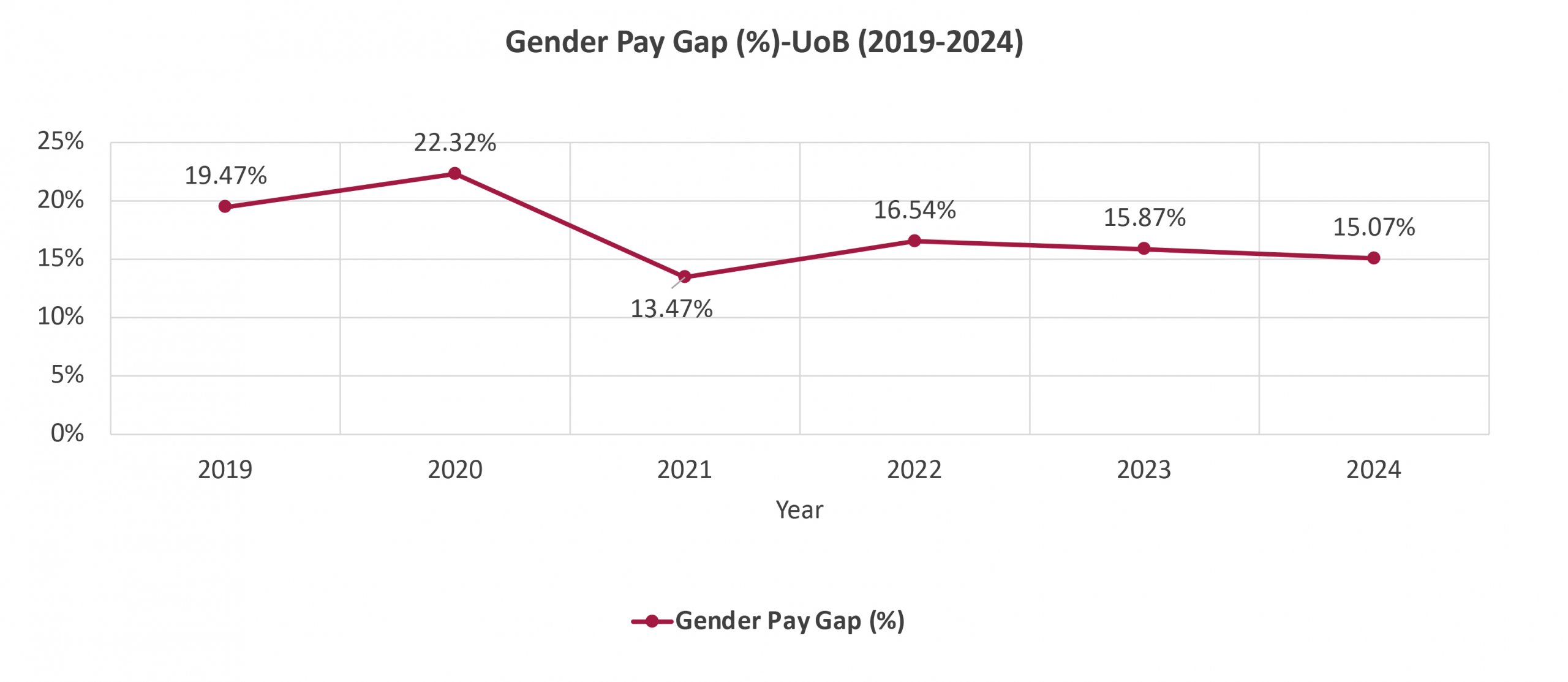
- Gender pay gap reduced from 19.5% in 2019 to 15.1% in 2024, demonstrating measurable progress.
3. Governance and Transparency
- The Equal Opportunity Committee reviews indicators annually and oversees corrective actions to reduce unjustified gaps.
- Metrics are sourced from verified HR records and payroll systems; detailed tables and trend visualizations are published on the University’s website for transparency.
This comprehensive monitoring process aligns with Bahrain’s Vision 2030 and demonstrates UoB’s strong commitment to gender pay equity in full alignment with SDG 8.2.7 and THE Impact Rankings requirements.
Table (1): Gender Pay Equity Indicators (2019–2024)
| Year | Avg Wage – Women (BHD) | Avg Wage – Men (BHD) | Gender Pay Gap (%) | Female Employees (%) | Female Promotions (%) |
|---|---|---|---|---|---|
| 2019 | 814.84 | 1011.86 | 19.47 | 41.39 | 39.47 |
| 2020 | 883.45 | 1136.41 | 22.32 | 42.52 | 34.95 |
| 2021 | 1353.44 | 1564.49 | 13.47 | 44.07 | 33.33 |
| 2022 | 1365.73 | 1636.67 | 16.54 | 44.57 | 40.74 |
| 2023 | 1397.60 | 1660.67 | 15.87 | 44.67 | 37.78 |
| 2024 | 1381.96 | 1627.18 | 15.07 | 44.62 | 36.73 |
Graph 1: Gender Pay Gap (%) – UoB (2019–2024)
The gender pay gap at UoB fluctuated between 2019 and 2024, peaking at 22.2% in 2020 before dropping significantly to 13.6% in 2021. Subsequent years show gradual improvement, reaching 15.1% in 2024. This trend reflects sustained efforts to reduce disparities through policy and monitoring.
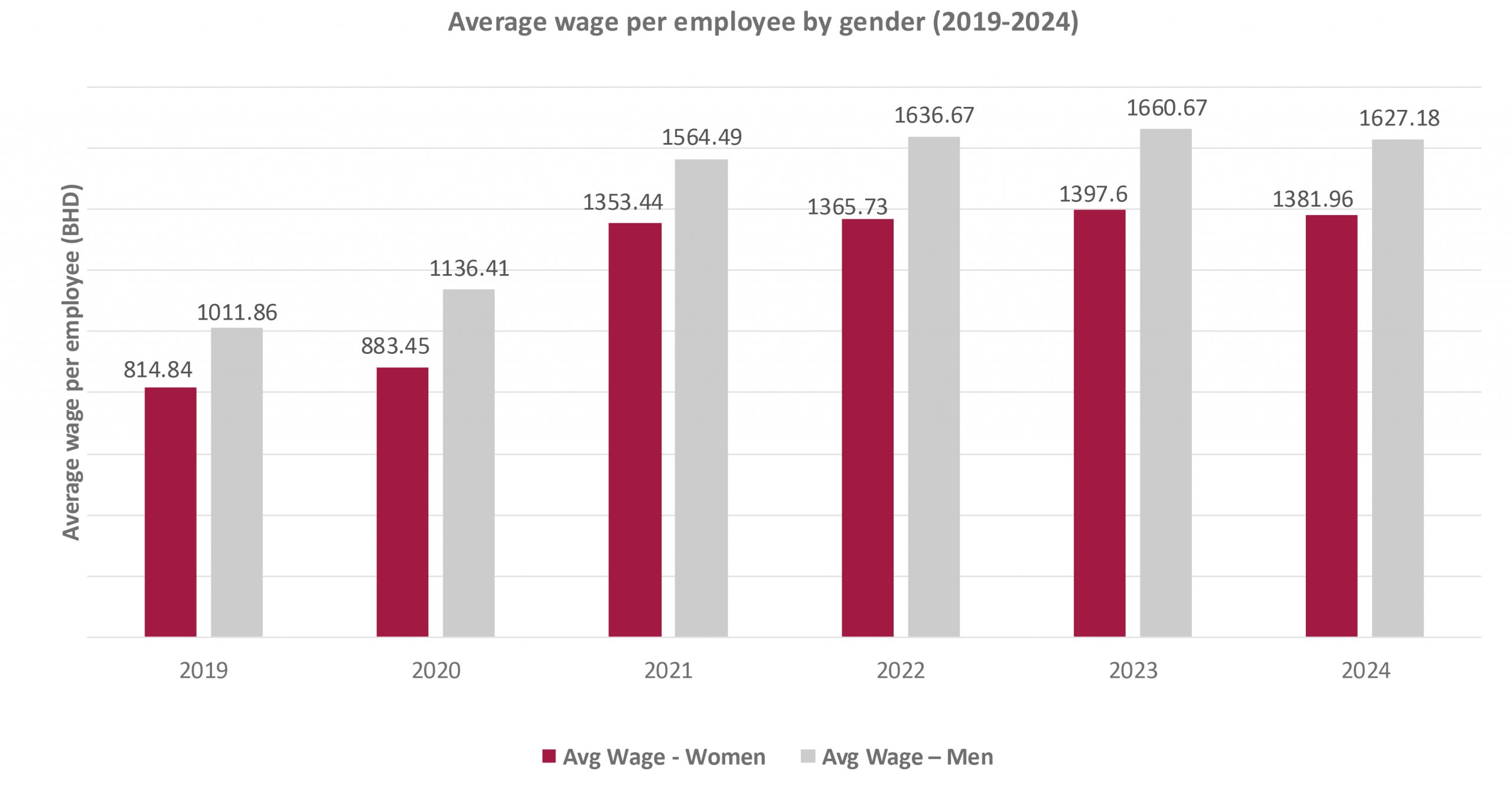
Graph 2: Average Wage per Employee by Gender – UoB (2019–2024)
Average wages for both genders increased steadily from 2019 to 2024. Men consistently earned more than women, but the gap narrowed over time. Women’s wages rose from ~800 BHD in 2019 to ~1,380 BHD in 2024, while men’s wages grew from ~1,000 BHD to ~1,620 BHD, indicating progress toward equity.