
NEWS
University of Bahrain Enhances Course Section Change Service for Newly Admitted Students as Part of Government Efforts to Improve Service Quality and Re-engineer Services
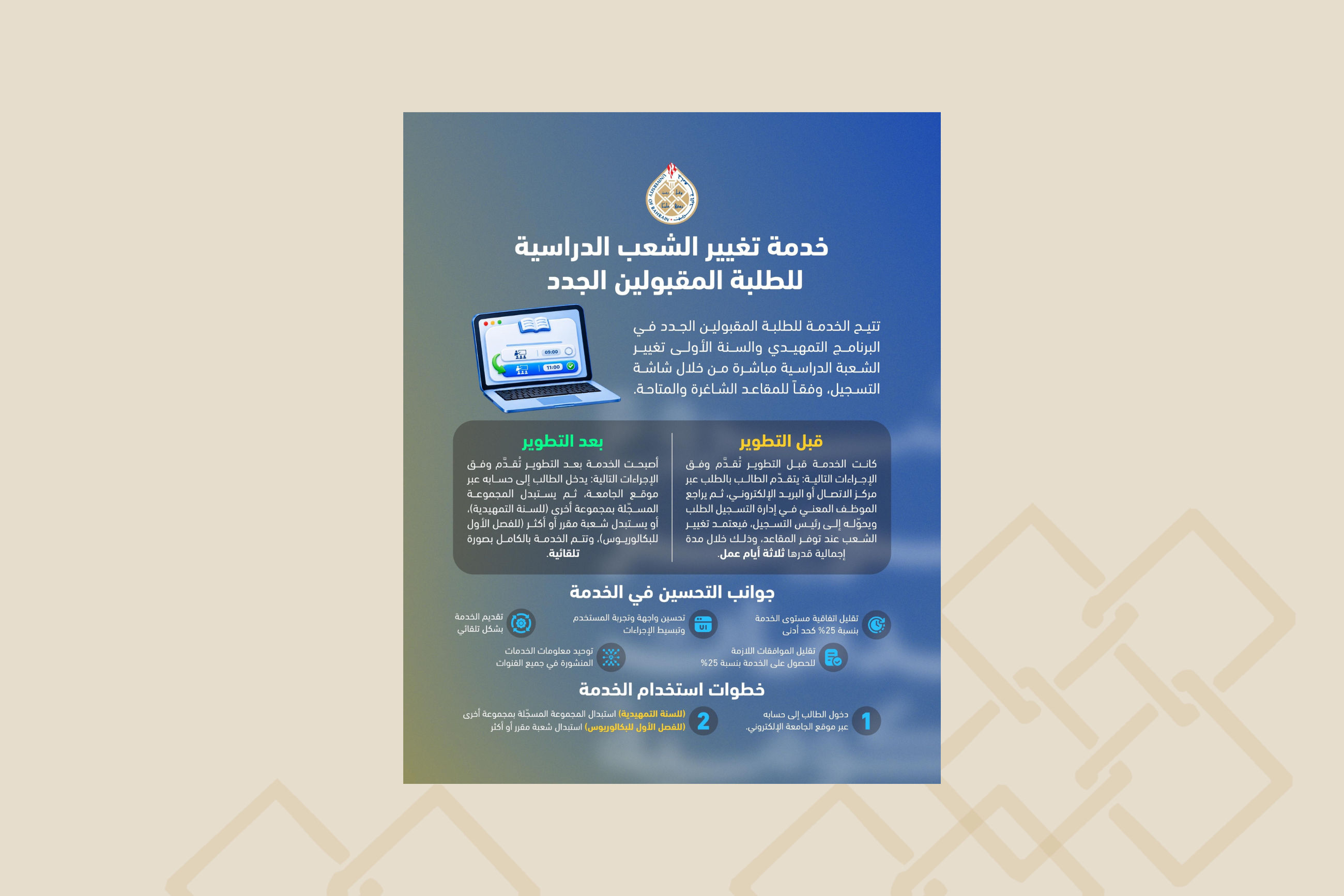
As part of ongoing government efforts to enhance service quality and re-engineer services, the University of Bahrain has upgraded its course section change service for newly admitted students. The service enables students enrolled in the Foundation Programme and first year to change their course sections directly through the registration interface in their student accounts on the University’s website, subject to seat availability.
Under the upgraded service, course section changes are now processed automatically, compared to the previous processing time of three days. The improvements include reducing the Service Level Agreement (SLA) by at least 25%, enhancing the user interface and experience, simplifying procedures, automating service delivery, reducing the number of required approvals by 25%, and standardising service information across all communication channels.
In this regard, University of Bahrain President Dr. Fuad Mohammed Al Ansari affirmed that upgrading the course section change service for newly admitted students allows them to change their sections directly through their online accounts, subject to available seats, without having to submit a request through the Student Service Centre. This streamlines the registration process while saving students time and effort.
Dr. Al Ansari explained that continuously developing digital services and simplifying academic procedures are among the University’s key priorities. He emphasised the University’s commitment to enhancing service efficiency and improving the student experience, in line with government efforts to improve service quality and re-engineer services.
It is worth noting that, as part of ongoing government efforts to develop and re-engineer government services, more than 1,300 government services have been documented, translated and published, with 800 of them undergoing development and re-engineering across various government sectors. These efforts are based on proposals and feedback received through the National Suggestions and Complaints System (Tawasul), investors’ feedback, and mystery shopper reports assessing government services. They also include the launch of service guidelines and Service Level Agreements (SLAs), contributing to more efficient procedures, improved service quality, an enhanced beneficiary experience, and the advancement of government digital transformation.