NEWS
University of Bahrain organises virtual workshops on Halal forensic sciences in cooperation with Thailand’s Chulalongkorn University
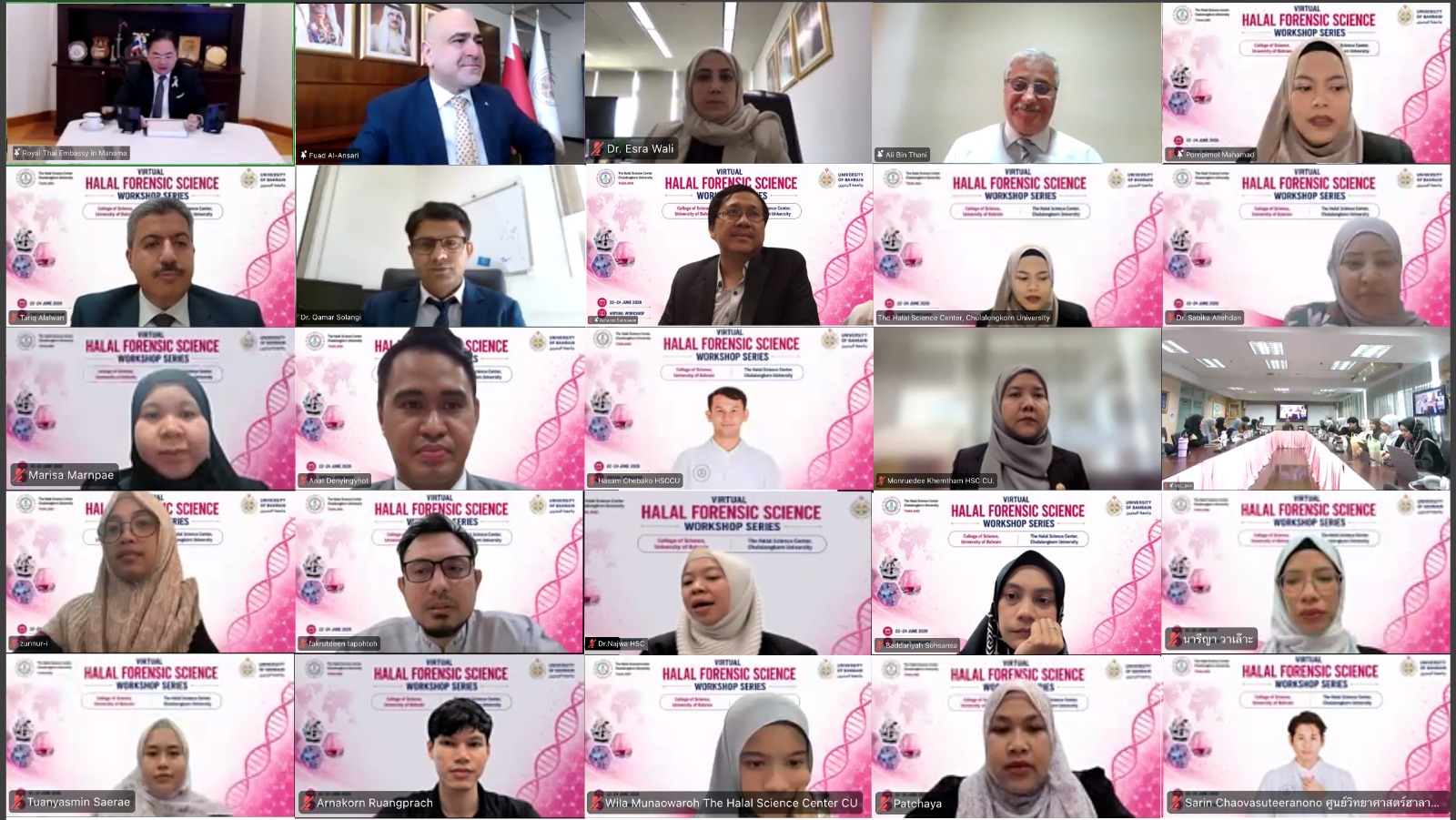
The University of Bahrain, in cooperation with the Halal Science Centre at Chulalongkorn University in the Kingdom of Thailand, organised a series of virtual workshops titled “Halal Forensic Sciences”. The workshops saw the participation of academic staff and students from the University of Bahrain, alongside technicians and specialists in food safety, Halal sciences, standards and metrology, and animal wealth management from the Ministry of Health, the Ministry of Industry and Commerce, the Ministry of Municipalities Affairs and Agriculture, and the Public Prosecution.
The workshops were organised in coordination with the College of Science at the University of Bahrain, within the framework of existing cooperation between the Halal Science Centre at Chulalongkorn University and the University of Bahrain, and as an extension of the memorandum of understanding signed between the two sides in 2024. The MoU aims to enhance international cooperation in education, research, and Halal technologies.
The workshops were inaugurated by Sumit Chulajata, Ambassador of the Kingdom of Thailand to the Kingdom of Bahrain; Dr. Fuad Mohammed Al Ansari, President of the University of Bahrain; and Dr. Pornpimol Muhammad, Director of the Halal Science Centre at Chulalongkorn University. They welcomed the participants and emphasised the importance of strengthening academic and research cooperation between the two countries.
Around 250 specialists, researchers, and participants seeking to develop their skills in the latest laboratory analysis and detection techniques took part in the interactive scientific workshops. Held over three days from June 22 to 24, 2026, the workshops reviewed key contemporary challenges in verifying the safety of Halal food and beverages.
The workshops addressed several specialised scientific topics, including Halal forensic laboratory tests, the fundamentals of ethanol detection in food and beverages, and the detection of porcine DNA and non-Halal animal species. They also reviewed advanced laboratory techniques, including headspace GC-FID, real-time PCR, high-resolution melting analysis (HRMA), DNA strip analysis, and LC-MS/MS technology to verify the animal source of gelatin.
The workshops provided participants with an opportunity for international networking and the exchange of expertise, while enhancing their skills in Halal sciences through interactive lectures and demonstrations held throughout the programme.