NEWS
UOB Explores Nuclear Energy Cooperation with U.S. Expert
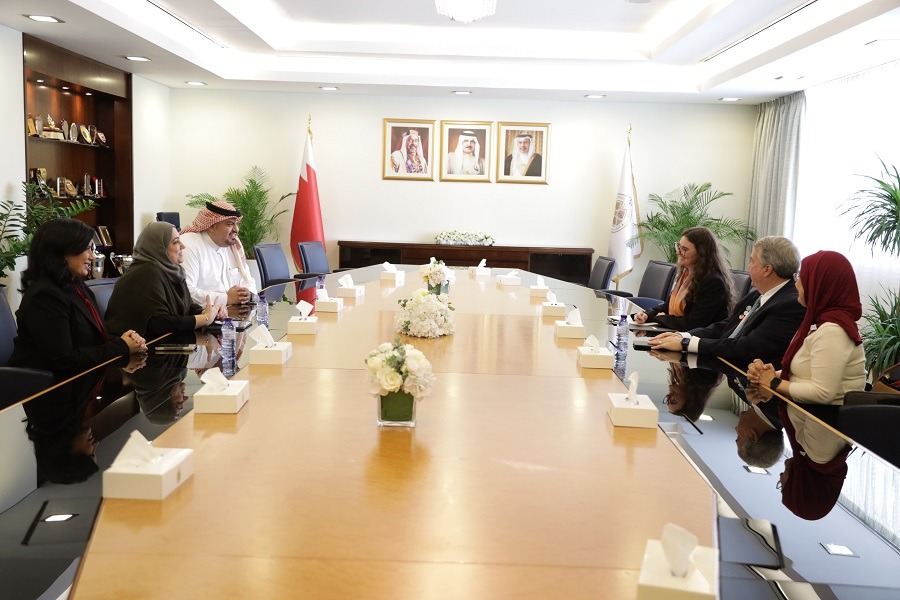
Dr. Esra Ahmed Wali, Vice President for Partnerships and Development at the University of Bahrain, met with Dr. Randy Beatty, a leading international expert in nuclear energy security and the nuclear fuel cycle. He was accompanied by Madeleine McLean, Cultural Affairs Officer at the U.S. Embassy, and Jinan Abdullah, Cultural Affairs Specialist at the U.S. Embassy to the Kingdom of Bahrain.
The discussions focused on leveraging Dr. Beatty’s extensive international expertise, particularly his experience as an advisor to the U.S. Department of Energy, his participation in international nuclear security programs, and his long career at Oak Ridge National Laboratory—a leading global research center in this field. They also addressed his pivotal role on the international team that helped develop the International Atomic Energy Agency’s ‘Three-Stage Framework,’ a fundamental reference for countries seeking to build capabilities in the peaceful uses of nuclear energy.
Both sides agreed to enhance cooperation by utilizing Dr. Beatty’s expertise to support the University’s efforts in integrating nuclear energy into academic and research programs and building national capacity. This aligns with Bahrain’s strategic directions and the agreement signed with the United States in July of last year on the peaceful uses of nuclear energy. Nuclear energy is a key option within Bahrain’s future energy mix, which would contribute to energy security and source diversification.
Also in attendance were, Dr. Shaikha Haifa Ebrahim Alkhalifa, Dean of the College of Engineering at the University of Bahrain, and Dr. Mohamed Bin Shams, Head of the Chemical Engineering Department.
Following the meeting, Dr. Randy Beatty delivered a scientific lecture titled: Nuclear Energy Without a Nuclear Department: Research and Innovation Pathways for Bahrain.
The lecture drew a large number of undergraduate and postgraduate students, as well as specialists from Bahrain’s and the wider Gulf’s industrial sector, and several College of Engineering faculty members. The session featured active interaction and open discussion, serving as a rich platform for exchanging views on key challenges in the nuclear energy field.