
Operations and Institutional Arrangement
SDG 13: Focus Areas
13.3.3 Co-operative planning for climate change disasters
Does your university as a body participate in co-operative planning for climate change disasters, that may include the displacement of people both within a country and across borders, working with government?
The University of Bahrain actively participates in co-operative planning for climate change disasters, working with government and external partners. In May 2024, UoB’s College of Engineering hosted “Industry-Academia Cooperation to Advance the Energy Transition” in collaboration with the U.S. Embassy in Bahrain and the Bahrain Center for Strategic, International and Energy Studies. This initiative focused on energy transition, climate resilience, and disaster preparedness, fostering applied research and policy integration aligned with Bahrain’s sustainability strategies. Through these partnerships, UoB strengthens institutional capacity, promotes knowledge exchange, and supports national resilience planning, including addressing potential displacement risks. These efforts directly advance SDG 13.3.
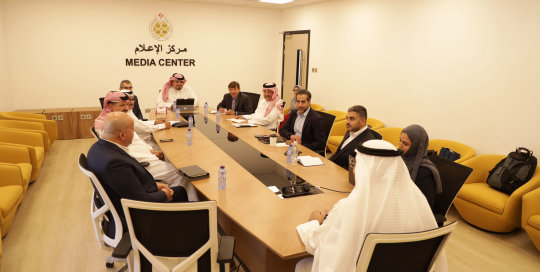
Collaboration Between Industry and Academia to Advance Energy Transformation
- Overview:
The College of Engineering at UoB hosted a panel discussion titled “Industry-Academia Cooperation to Advance the Energy Transition” in collaboration with the U.S. Embassy in Bahrain and the Bahrain Center for Strategic, International and Energy Studies. This event, held on May 2, 2024, brought together industry experts and academic researchers specializing in unconventional gas and sustainable energy to explore joint opportunities in energy transformation and innovation. - Initiative Significance:
- The session emphasized the critical role of collaborative networks between industry, academia, and government in achieving Bahrain’s energy transition and climate resilience goals.
- Participants shared insights on innovative approaches to address challenges in renewable and sustainable energy systems, fostering applied research that aligns with national sustainability strategies.
- The initiative strengthens UoB’s leadership in driving partnerships that connect academic research with industrial application, supporting knowledge transfer and innovation ecosystems.
- Impact and SDG Alignment:
- This initiative directly supports SDG 13 – Climate Action, specifically:
- Target 13.3: Improve education, awareness, and human and institutional capacity on climate change mitigation, adaptation, and impact reduction.
- Indicator 13.3.5: Collaboration with NGOs / external partners — represented through UoB’s cooperation with the U.S. Embassy and the Bahrain Center for Strategic, International and Energy Studies to enhance knowledge exchange and institutional capacity on energy transition.
- This initiative directly supports SDG 13 – Climate Action, specifically:
Summary:
Through these collaborative activities, the University of Bahrain demonstrates its commitment to co-operative planning for climate change disasters, working with government and external partners at the local and regional levels. These efforts contribute to national and regional preparedness, capacity building, and resilience in the face of climate-related challenges, including potential displacement of people.