
Sustainability Governance and Operations
University of Bahrain – Institutional Framework
The University of Bahrain (UOB) has established a comprehensive Sustainability Governance Framework that provides direction, coordination, and accountability for all sustainability efforts across the University. The framework is adapted from internationally recognized COBIT Governance Principles, ensuring that actions are systematically planned, implemented, and continuously improved.
The framework is guided by the Sustainability Steering Committee, which oversees policy direction and institution‑wide integration of sustainability into academic, administrative, and operational levels.
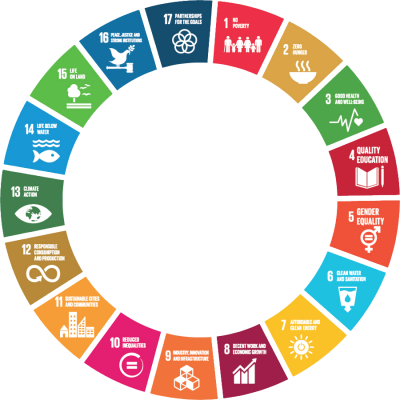
UOB’s initiatives align with the Kingdom of Bahrain’s Vision 2030 and the United Nations Sustainable Development Goals (SDGs), promoting innovation, environmental responsibility, and social well‑being through education, research, and operations.
Comprehensive Focus Areas
- Alignment with Bahrain Vision 2030 and Global Goals – Supporting national priorities and global sustainability agendas through the UN SDGs and ranking frameworks such as THE Impact and QS Sustainability.
- Sustainable Education and Research – Embedding sustainability in curriculum and research to enhance knowledge and innovation capacity.
- Energy and HVAC Efficiency – Enhancing building performance and responsible resource use while reducing carbon emissions.
- Sustainable Campus Operations – Implementing smart technologies and efficient resource management across the campus.
- Social Equity and Well-Being – Promoting inclusive growth, gender equality, and safe working and learning environments.
- Community and Government Partnerships – Collaborating with the Supreme Council for Environment, the Ministry of Education, and United Nations agencies such as the UN Development Programme (UNDP) to promote shared sustainability goals.
- Innovation and Digital Transformation – Utilizing data-driven tools and digital technologies for performance optimization and decision support.
- Transparency and Governance Reporting – Publishing annual reports and performance dashboards to communicate progress and drive accountability.
Governance and Reporting Structure
Sustainability Steering Committee
Strategic oversight and performance review.
Sustainability Committee
Implementation and coordination.
Colleges & Operational Units
Execution and reporting.
Committees and Teams
Sustainability Steering Committee
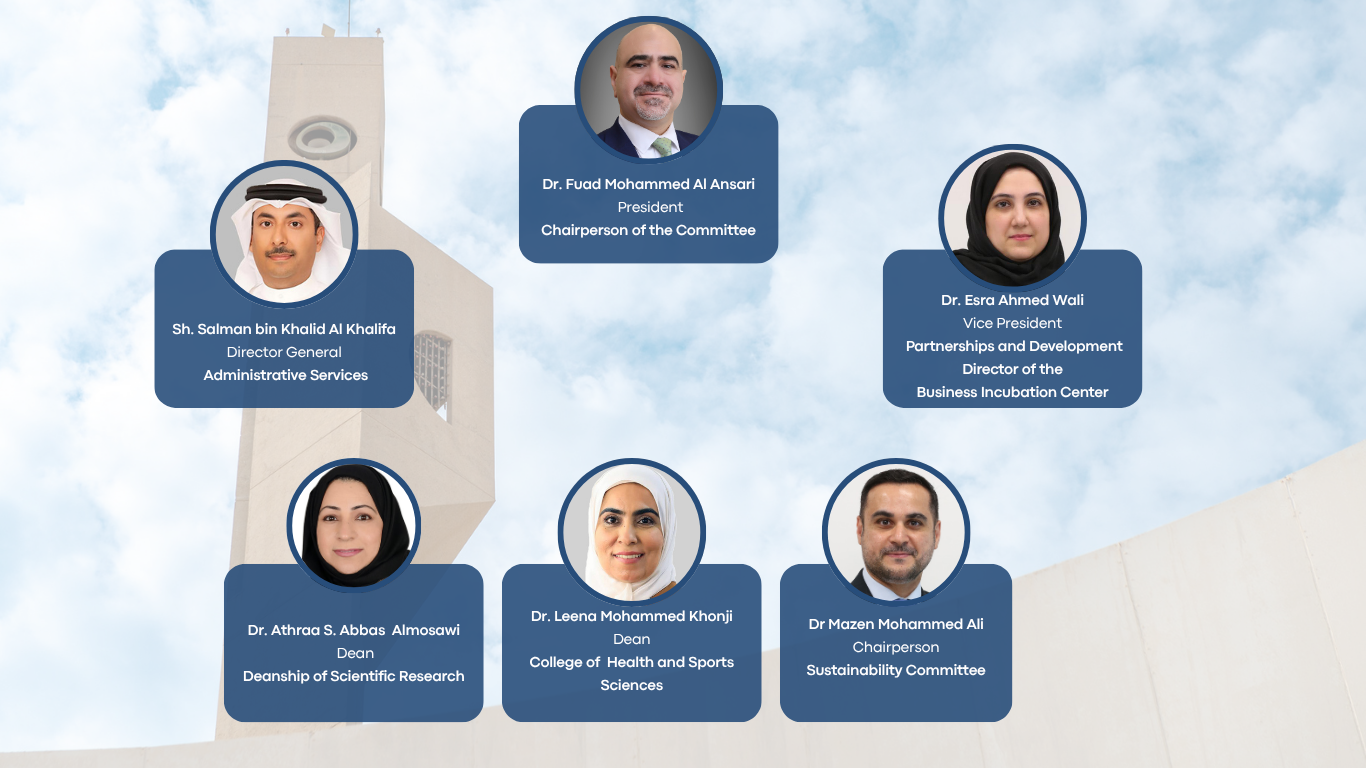
- Chairperson: University President
- Members: Vice Presidents, College Deans, Director of Facilities Management, Director of Environmental Health & Safety, Sustainability Officer
- Secretariat: Office of Sustainability Governance
Sustainability Committee
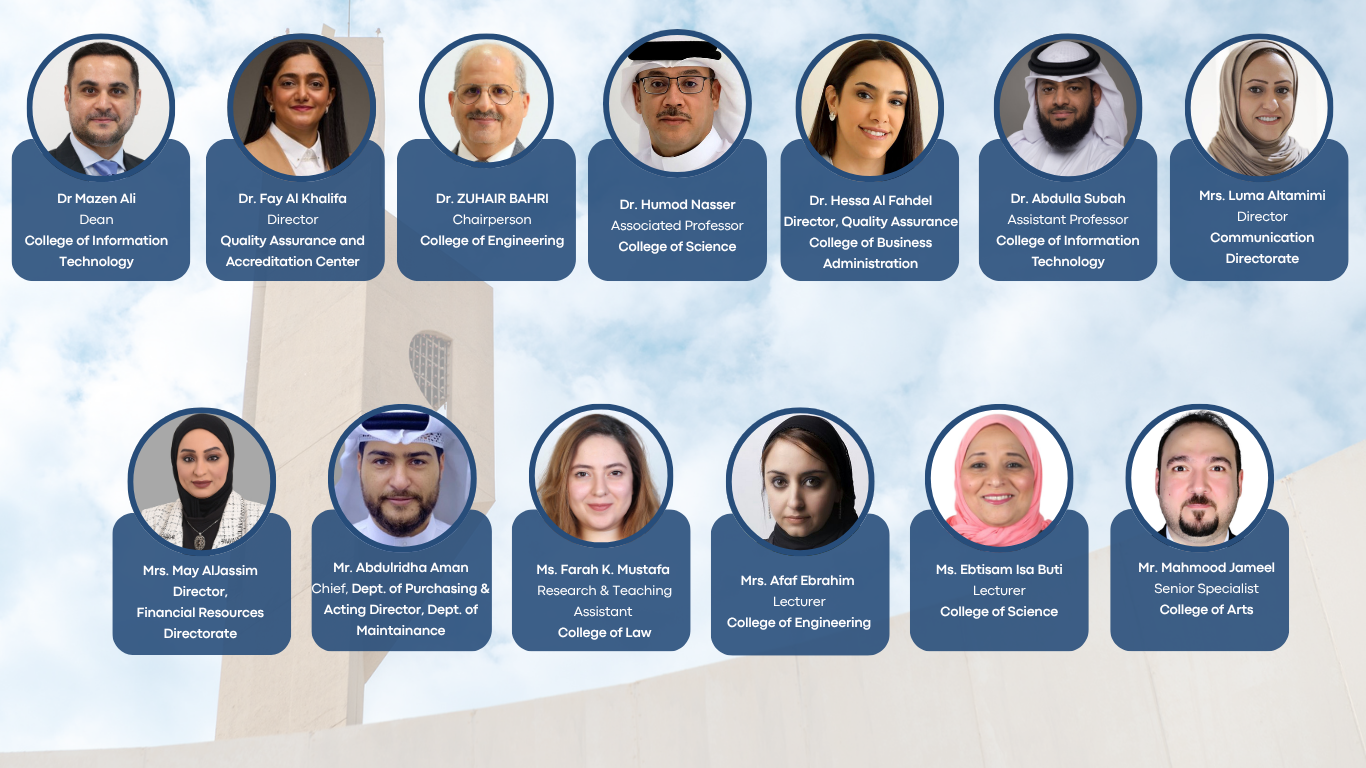
- Chairperson: Dr. Mazen Ali, Dean, College of Information Technnology
- Members: Representatives from colleges and major operational units including Facilities Management, HR, Procurement, and Academic Development
- Scope: Operational execution including energy management, waste reduction, transport planning, and curriculum-based engagement
Reporting Cycle and Accountability
Each tier of UOB’s sustainability framework operates within a structured reporting cycle that aligns with COBIT principles and the Kingdom of Bahrain’s Vision 2030. Regular reviews enable data‑driven decision making and support compliance with global sustainability standards and the UN SDGs.
| Reporting Tier | Receives From / Sends To | Key Documents / Outputs | Frequency |
|---|---|---|---|
| Colleges & Operational Units | Sustainability Committee | Project performance reports & resource consumption updates | Quarterly |
| Sustainability Committee | Sustainability Steering Committee | KPI Dashboards, Progress Summaries, and Action Plans | Quarterly |
| Sustainability Steering Committee | University Leadership | Annual Sustainability Report & Strategic Performance Review | Annual / Bi-Annual Review Session |
Table – Reporting Cycle and Accountability: Structured reporting between the Sustainability Steering Committee, Sustainability Committee, and Colleges & Operational Units to support Vision 2030 and COBIT-aligned governance practices.