Operations and Institutional Arrangement
SDG 13: Focus Areas
13.3.4 Inform and support government
Does your university as a body inform and support local or regional government in local climate change disaster/risk early warning and monitoring?
The University of Bahrain informs and supports government in climate change disaster risk early warning and monitoring through its Renewable Energy Laboratories (RELabs), established in 2018 as a national reference center. RELabs provides technical consultations to government agencies on climate-resilient energy and water systems, conducts studies on renewable integration and vulnerabilities, and offers solar radiation and weather data via its Solar PV Testing Lab to enhance early warning systems. It also collaborates on biomass research and organizes workshops for government and industry stakeholders on climate adaptation strategies. These efforts strengthen institutional capacity, support Bahrain’s climate resilience goals, and align with SDG 13.3 by enabling proactive disaster risk reduction and monitoring.
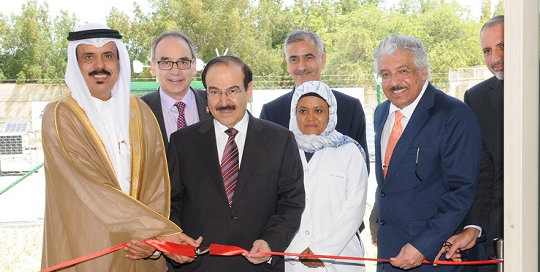
University of Bahrain Renewable Energy Laboratories
The University of Bahrain (UOB) informs and supports the Kingdom of Bahrain’s government through its Renewable Energy Laboratories (RELabs) , established in 2018 as a national reference center for renewable energy and climate resilience. RELabs plays a critical role in advancing Bahrain’s capacity for climate change adaptation and disaster risk management by:
- Conducting comprehensive studies of Bahrain’s energy network to assess readiness for renewable energy integration and identify vulnerabilities related to climate risks.
- Providing technical consultations to government agencies on designing climate-friendly and fully integrated energy and water systems, which enhance resilience against climate-related disasters.
- Offering solar radiation and weather data through the Solar PV Testing Lab, supporting early warning systems and monitoring for extreme weather events.
- Collaborating with local and private organizations to analyze waste composition and biomass potential, contributing to sustainable resource management and reducing climate-related risks.
- Organizing workshops and training programs for government and industry stakeholders on renewable energy systems and climate adaptation strategies.
Services
Solar PV Testing Lab
- Tests solar panels and provides clients with comprehensive performance reports.
- Offers researchers and organizations access to solar radiation intensity and weather data in Bahrain.
- Facilitates high-quality solar energy research and innovation projects.
- Organizes workshops and training programs on renewable energy system installation and operation.
- Documents: PV Testing Sample Report, Request Form for Solar and Weather Data.
The Biomass Lab
- Tests anaerobic digestion (AD) bacteria tolerance for different types of waste provided by local and private organizations.
- Conducts detailed waste composition analyses for research and industry partners.
- Supports biomass and bioenergy research for M.Sc. and Ph.D. students at the University of Bahrain.
- Documents: Request Form for Sample Testing and Data Analysis at the Biomass Lab.
Impact and SDG Alignment:
- Directly supports SDG 13 – Climate Action and Target 13.3 by strengthening institutional capacity for climate risk monitoring and adaptation.
- Contributes to Bahrain’s national vision for a low-carbon, climate-resilient economy and readiness for net-zero emissions by 2060.
This evidence demonstrates UOB’s proactive role in informing and supporting government efforts for climate disaster risk reduction and early warning systems.
Link to Evidence: https://www.bna.bh/en/news?cms=q8FmFJgiscL2fwIzON1%2BDkz0QLcmyq1c%2B5c64SbRGak%3D
Explore More
 |
 |
 |
 |
 |
 |
 |